
You crawl into bed with bone-deep fatigue, feeling utterly tired but wired. Your eyes are heavy, your body aches for rest, yet you can’t seem to fully unwind.
Thoughts race. Your chest feels buzzy. Your legs won’t settle. You’re tired, but somehow… alert. Like your nervous system didn’t get the memo that it’s nighttime.
If you’ve ever found yourself thinking, “My body is exhausted but my mind just won’t quit,” you’re not alone, and there’s nothing wrong with you. You’re simply caught in a cycle, and cycles can be broken.
“Tired but wired” is a state of physiological hyperarousal, where your body feels exhausted but your stress system stays activated. The solution is not trying harder to sleep. It’s reducing arousal, aligning circadian rhythm with sleep drive, lowering evening stimulation, and retraining the nervous system (and the bed) to associate nighttime with safety and shutdown.
What Does "Tired But Wired" Mean?
"Tired but wired" (sometimes called "wired but tired" or "t'wired," a term popularized by Rubin Naiman, PhD) describes a specific insomnia experience:
-
Your sleep drive is there (you feel tired).
-
But your arousal system is also there (you feel keyed up).
In other words, you are sleepy and activated at the same time.
What it can feel like
People describe it as:
-
Racing thoughts or “busy brain”
-
A buzzing or vibrating body
-
Restless legs or constant position changes
-
Faster heart rate or shallow breathing
-
A warm core body temperature
-
The sense that you “can’t switch off”
Why Does Your Body Feel Tired but Your Mind Is Awake?
Think of tired-but-wired as a reinforcing loop:
-
Poor sleep raises stress signals.
-
Higher stress signals make you try harder.
-
Trying harder increases arousal.
-
Higher arousal makes sleep harder.
And the loop continues.
Here are some common reasons why you would feel t'wired:
Anxiety
Anxiety is one of the most common drivers behind the “tired but wired” feeling. When you’re anxious, your mind tends to get stuck in cycles of worry or anticipation; constantly scanning for problems, even when you want to rest.
Insomnia and anxiety frequently reinforce each other: anxiety worsens sleep, and sleep loss worsens emotional regulation.
Common signs anxiety is interfering with your sleep include:
-
Racing thoughts or mental “what ifs” at bedtime
-
Physical symptoms like a tense jaw, tight shoulders, or clenched fists
-
A restless body that feels alert or jumpy, even when exhausted
-
Difficulty turning off intrusive thoughts about work, relationships, or health
Remember: experiencing some anxiety at night is common and treatable. Addressing stress and learning calming techniques can help you break the tired-but-wired loop.
ADHD
This “tired but wired” state in ADHD is often tied to the way the ADHD brain manages arousal and attention. The mind can feel scattered or hyper-focused on certain interests late at night, leading to trouble powering down.
A common pattern is “revenge bedtime procrastination”—putting off sleep to enjoy stimulating activities (like scrolling, gaming, reading, or creative projects) because these finally hold your interest after a day of distractions and demands.
Many people with ADHD experience:
-
Delayed sleep timing (naturally wanting to sleep later)
-
A brain that gets more alert at night
-
Difficulty transitioning from stimulation to shutdown
-
Feeling physically tired but mentally keyed up
-
Sensory seeking (craving music, videos, or tactile fidgets)
-
Trouble sticking to a consistent bedtime routine
Medication timing matters here too. If stimulant effects overlap with your wind-down window, they can keep the nervous system elevated. Adjusting dose timing (always with prescriber guidance) can be key for better sleep.
ADHD-related sleep issues also intersect with circadian rhythm delays (being a natural night owl) and emotional self-regulation struggles. This makes wind-down routines especially important.
Bipolar Disorder
Bipolar-related sleep changes can look like insomnia, but there’s a key difference:
-
In hypomania/mania, there can be a reduced need for sleep with increased energy, confidence, or impulsivity.
-
Unlike typical insomnia, people in manic or hypomanic states may feel rested and energetic despite getting very little sleep, or even none at all, for several nights in a row.
-
This “wired” feeling isn’t just restlessness; it’s often accompanied by racing thoughts, pressured speech, rapid ideas, and sometimes risky behaviors (excessive spending, fast driving, making big plans).
-
During depressive episodes of bipolar disorder, the opposite may occur: excessive tiredness and difficulty getting restful sleep despite long hours in bed.
If you notice these patterns, especially fluctuating between periods of unusually high energy and deep fatigue, it’s important to seek a professional evaluation. Early recognition can make a significant difference in long-term well-being.
Insomnia Disorder
Insomnia disorder is characterized by persistent difficulties falling asleep, staying asleep, or waking too early and being unable to return to sleep despite adequate opportunity and circumstances for rest. These issues occur at least three times per week and persist for at least three months, often leading to significant daytime distress or impairment.
Common features of insomnia disorder include:
-
Sleep anxiety: Persistent worries about not being able to fall asleep or get enough rest. This can become a self-perpetuating cycle: anticipating another bad night increases stress, which in turn makes it even harder to sleep.
-
Conditioned arousal in bed: Over time, your brain may start to associate your bed and bedtime with wakefulness, frustration, or anxiety rather than relaxation and sleep. This classical conditioning means that simply getting into bed can trigger alertness rather than drowsiness.
-
The sleep effort paradox: The more you try to force yourself to sleep (“I have to fall asleep right now!”), the more elusive sleep becomes. This performance pressure activates the arousal system, keeping you more awake.
How CBT-I Helps
Cognitive Behavioral Therapy for Insomnia (CBT-I) is widely recognized as the most effective treatment for persistent insomnia. Rather than just treating symptoms, CBT-I helps you untangle the patterns of thought and behavior that keep you stuck in a sleep-deprived loop.
If you’re curious about what this looks like in practice, resources like NIH/NCBI offer detailed breakdowns of CBT-I tools and the solid evidence behind them.
Building on these foundations, approaches like SSA’s Dynamic Sleep Recalibrating (DSR) tackle sleep as a 24-hour process and not just something that happens at night.
Here’s how this broader approach works:
-
Daytime choices: Structuring your activity levels, managing mental workload, and supporting your nervous system throughout the day to reduce nighttime “wired” feelings.
-
Planned rest breaks: Using strategic downtime to restore energy without reinforcing unhelpful sleep habits, teaching your brain when it’s actually time to wind down.
-
Light exposure: Timing morning sunlight and dialing down evening brightness to nudge your body clock back into sync and strengthen natural melatonin cues.
-
Emotional skills: Borrowing from Acceptance and Commitment Therapy (ACT), mindfulness, and classic CBT-I strategies to quiet sleep anxiety and break cycles of frustration or worry about sleep itself.
-
Cognitive shifts: Rewriting unhelpful stories you tell yourself about sleep so you’re less caught up in catastrophic thinking or “I’ll never sleep” spirals.
-
Personalized planning: Mapping out a strategy that fits your own life: your stressors, routines, and triggers, so you can adjust as things change.
The big idea: Sleep isn’t just about what happens when you turn out the lights. It’s shaped by everything from morning habits to emotional patterns. DSR weaves together these threads, helping you build a daytime foundation that sets you up for better nights.
Circadian Rhythm Disruption
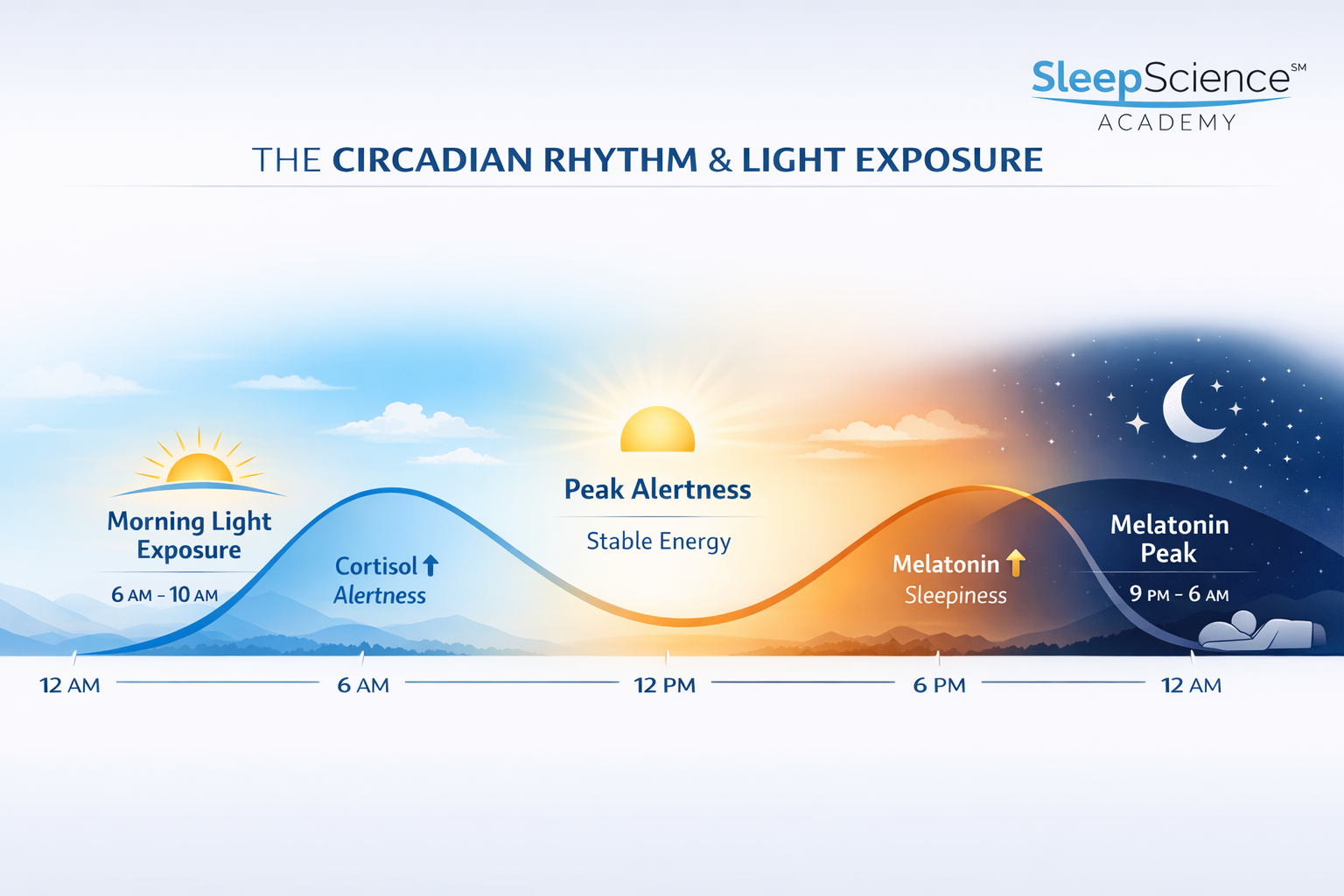
If your internal clock, or circadian rhythm, is misaligned, you might notice a persistent mismatch between when your body feels ready for sleep and when you want or need to sleep. This is especially common in “night owls,” shift workers, or anyone who has recently traveled across time zones, but it can happen to anyone whose lifestyle or environment chronically pushes their natural rhythm later.
What it feels like:
-
You feel sluggish, foggy, and low-energy throughout the day, even if you technically got enough hours of sleep.
-
As evening comes on, your mind becomes increasingly alert or even hyperactive, making it hard to wind down or fall asleep at a “normal” hour.
-
If allowed to follow your body’s signals (going to bed very late and waking up late), you may actually get good, restorative sleep.
Why this happens:
Your circadian rhythm is set by external cues (primarily light), but also by behaviors like meal timing and activity. Delayed exposure to morning light, excessive evening light (especially from screens), irregular wake times, and late meals or caffeine can all shift your biological night later. This means your brain’s melatonin production (the “sleep hormone”) starts later, so you don’t feel sleepy until late at night.
Bottom line:
When circadian disruption is fueling your “tired but wired” cycle, focus less on bedtime itself and more on consistent wake-up times and early-day light cues. Over several days to weeks, these changes help nudge your internal clock earlier and rebalance energy across the entire day-night cycle.
The ‘T’wired Reset’: A Simple, Step-by-Step Plan
Core idea: Sleep returns when your system feels safe, rhythms are steady, and you stop fighting your biology.
Try these steps for a 14-day experiment. Aim for consistency, not perfection.
1. Allow Sleep; Don’t Chase It
Chasing sleep signals stress to your body. Instead, remind yourself:
-
“My job is to rest.”
-
“Sleep is the outcome and not the task.”
-
“Even if I’m awake, I can still practice rest.”
Sleep improves with regular practice, not one perfect night.
2. Build a Real Wind-down Routine
Your brain needs time to slow down before bed. Set aside 30–60 minutes for:
-
Dim lights
-
Warm shower or bath
-
Light reading (paper preferred)
-
Gentle stretching
-
Calm music
-
Unhurried skincare routine
Short on time? Try this 10-minute version:
-
3 min: dim lights, put phone away
-
4 min: slow breathing exercises
-
3 min: jot down a quick “tomorrow list” to clear your mind
3. Use Daily Downshift Tools (Pick 1–2)
You only need one or two tools, used daily, to make a difference.
Options:
-
Slow-exhale breathing: Inhale gently; exhale longer than inhale for several minutes.
-
Non-striving meditation: Body scan or simply notice thoughts without engaging.
-
Gentle yoga: Skip intense workouts late at night.
Choose a set time and duration each night and track your consistency.
4. Set Stimulation Curfews
Protect your evenings by limiting stimulation:
Caffeine: Cut off 8–10 hours before bed.
Content: Avoid doom scrolling, heated debates, and intense shows before bed. Choose calming alternatives like light reading or soothing music.
Conflict: Delay tough conversations and planning until tomorrow; use a quick “tomorrow list.”
Light: Dim lights in the last hour before bed; get bright light exposure in the morning.
5. Fix Your Two Anchors: Wake Time & Morning Light
Focus on:
-
Consistent wake time: Stick within an hour window every day (including weekends).
-
Morning outdoor light: Get outside soon after waking to help reset your circadian rhythm.
Shift workers may need tailored strategies. Seek professional advice if needed.
6. Protect Sleep Pressure Without Crashing
To build a healthy sleep drive during the day:
-
Limit time awake in bed. If you can’t sleep, get up.
-
Nap briefly (10–20 min) and early if needed.
-
Avoid alcohol as it fragments sleep.
-
Move during the day (walks, light strength training), but avoid overexertion when tired.
7. What to Do at 2am When You’re Wired
If awake for more than ~20 minutes:
-
Get out of bed (don’t check the clock).
-
Keep lights dim.
-
Do a quiet activity: light reading, gentle stretching, simple puzzles.
-
Go back to bed when sleepy.
Avoid phones, bright screens, work tasks, or problem-solving at this time.
*Optional cognitive offloading: Write down worries (“brain dump”) and remind yourself: “This is my nervous system; it will settle.”
When “Tired But Wired” May Signal a Medical Condition
If tired-but-wired is frequent and persistent, it can overlap with conditions that deserve medical evaluation, such as:
-
Chronic insomnia disorder
-
Circadian rhythm sleep-wake disorders
-
Obstructive sleep apnea (even without the “classic” profile)
-
Restless legs syndrome
-
Medication/substance effects (stimulants, some antidepressants, nicotine)
-
Cannabis/alcohol patterns affecting sleep architecture
Consider talking to a clinician if symptoms last more than 3 months, cause severe impairment, include loud snoring/gasping, or create safety risks.
How Clinicians Evaluate This Symptom
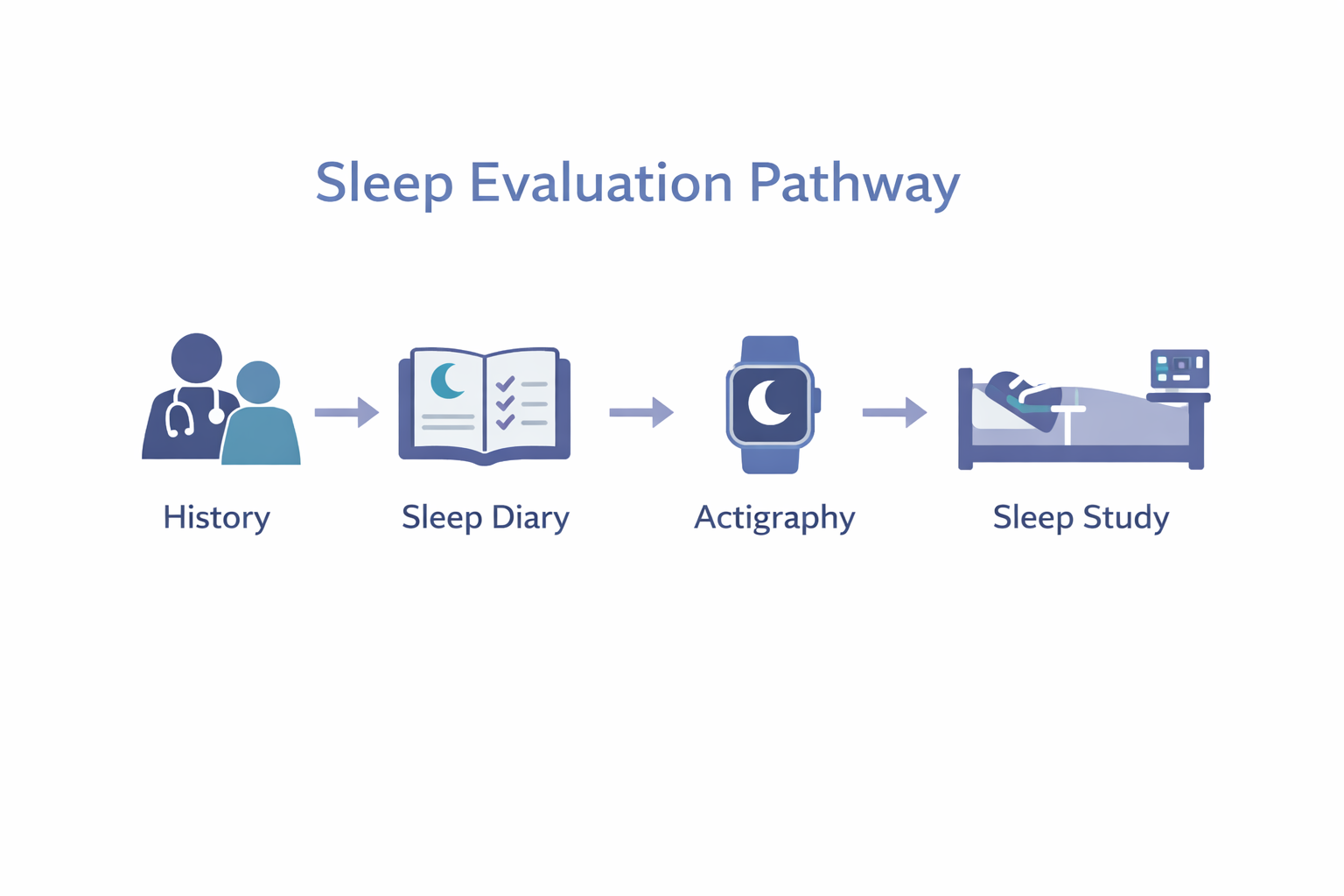
A standard evaluation may include:
-
Detailed sleep history (sleep timing, awakenings, naps, sleep environment)
-
Medication and supplement review
-
Screening for anxiety, depression, bipolar symptoms, substance use
-
Sleep tracking and sleep diary
-
Actigraphy (a wearable-based estimate of sleep and circadian patterns) when helpful
-
Polysomnography (overnight sleep study) when sleep apnea, movement disorders, or unusual events are suspected
Wrap-up: Break the Loop
The path out of a “tired but wired” state isn’t about forcing yourself to sleep; it’s about restoring balance in your mind and body. When you consistently support healthy rhythms, manage hyperarousal, and rebuild positive sleep associations, restful nights become possible again. Imagine going to bed without dread or racing thoughts, feeling calm as night falls, and waking up ready for your day. With the right tools and guidance, this future is within reach. Sleep
At Sleep Science Academy (SSA), we teach a simple truth: sleep is a result of balance, not something you can force. Our work is education and coaching (not medical care), focused on helping people reduce the real drivers of insomnia so sleep can return naturally.