
You’re exhausted, but the moment the lights go out, your mind speeds up. Racing thoughts at night are a form of cognitive hyperarousal that makes it difficult to fall asleep or return to sleep. They are often fueled by anxiety, stress, ADHD, or a nervous system that hasn’t shifted into sleep mode. When stress hormones stay elevated, your brain won’t power down. What helps most is creating enough physical and mental safety for your body to ease out of alert mode and drift toward sleep.
When your body is tired but your mind won’t stop racing
You’re tired. Your eyes feel heavy. You finally turn the lights out.
And then it happens.
A thought avalanche. A rapid replay of conversations. A sudden fear about tomorrow. A to-do list that turns into a full-blown life audit. You stare at the ceiling thinking, Why can’t I just sleep?
In this guide, you’ll learn:
-
What racing thoughts at night actually are (and what they are not)
-
The most common causes, including anxiety, ADHD patterns, and bipolar red flags
-
What to do tonight for quick relief
-
Evidence-based, CBT-I aligned strategies for lasting change (without forcing sleep)
The Sleep Science Academy (SSA) is an education and coaching-first organization. We don’t diagnose, treat, or prescribe. This article is not medical advice. It is practical sleep science, aligned with evidence-based insomnia frameworks, plus holistic coaching strategies that target root causes. Because sleep is a result of balance, not something you can brute-force.
What Are Racing Thoughts at Night?
Racing thoughts at night are fast, repetitive, hard-to-control thoughts that feel mentally “loud” when you’re trying to fall asleep or get back to sleep. They often come with emotional charge (worry, urgency, dread, excitement) and a sense that your mind will not settle, even though your body is tired.
This matters because sleep onset requires two things:
-
Low cognitive arousal (your mind is not actively processing threats, plans, or regrets)
-
Low physiological arousal (your body is not in fight-or-flight)
When you’re dealing with racing thoughts, your system is stuck in hyperarousal. That can involve sympathetic nervous system activation and stress hormones like cortisol and adrenaline. Over time, many people also develop conditioned arousal: the bed itself becomes a cue for wakefulness, frustration, and effort.
Racing Thoughts vs. Rumination vs. Intrusive Thoughts
These get mixed up, but they’re not the same.
-
Racing thoughts: rapid, often shifting topics, “sped up” mental activity
-
Rumination: repetitive looping on one theme (usually worry, regret, or “why” questions)
-
Intrusive thoughts: unwanted, distressing thoughts or images that pop in and feel alarming
For deeper reading on the anxiety-sleep relationship, the National Institutes of Health (NIH) and other peer-reviewed sleep medicine literature consistently describe insomnia as a hyperarousal condition, not simply a nighttime habit problem.
What Causes Racing Thoughts at Night?
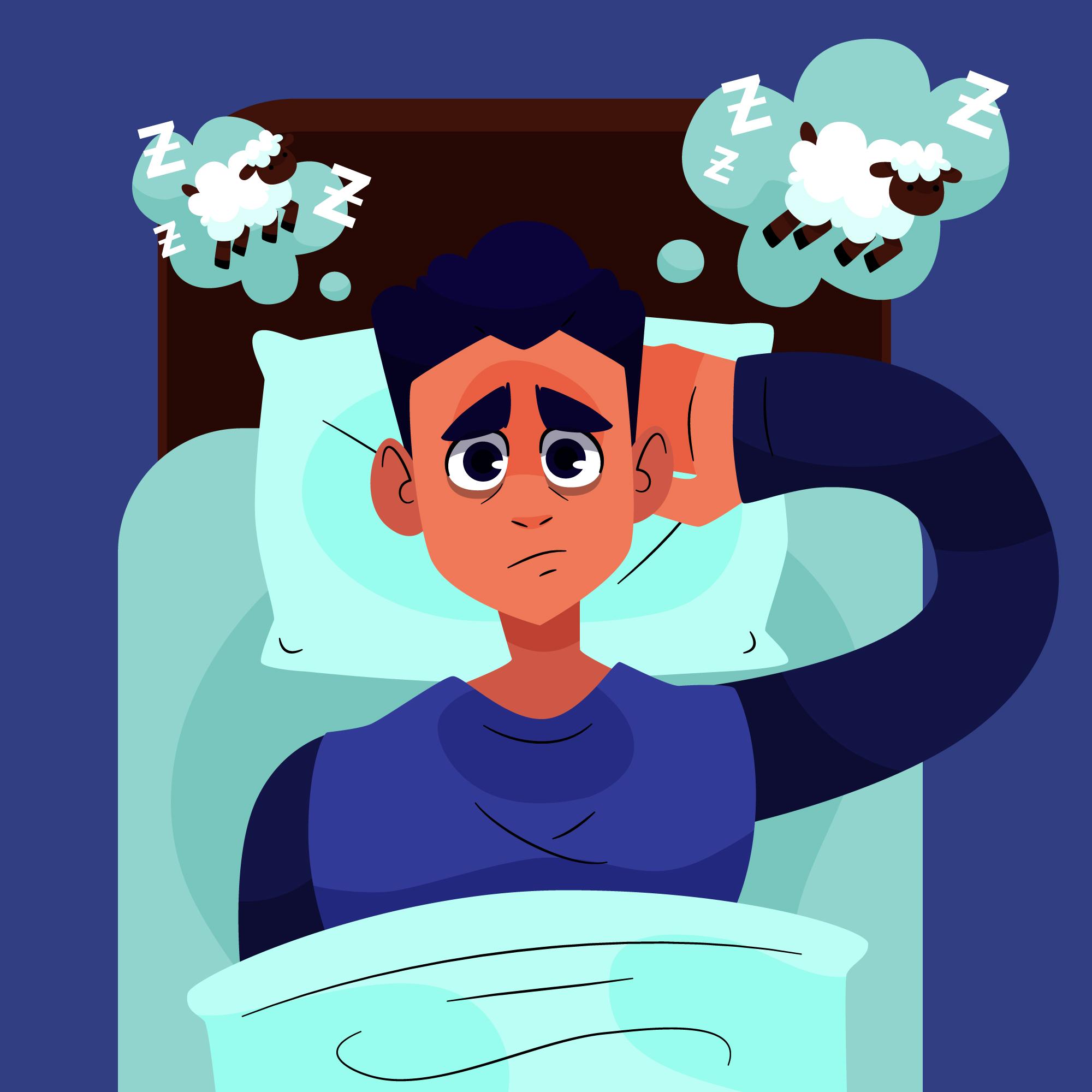
Most people assume racing thoughts mean “something is wrong with me.”
More often, it means something is unprocessed, overstimulated, mis-timed, or conditioned.
Here’s a scannable checklist of common drivers:
-
Stress load and unprocessed emotion: your brain finally has quiet time, so it brings the backlog
-
Bedtime decompression and “revenge bedtime”: you stay up late to reclaim time, then your mind ramps up
-
Sleep performance pressure: “I must sleep now” becomes a threat signal
-
Blue light and stimulation: doom scrolling, news, social media, gaming, late-night work email
-
Late cognitive work: planning, studying, problem-solving, intense conversations
-
Irregular schedule: inconsistent wake times, long naps, social jet lag
-
Caffeine or nicotine timing: even “afternoon coffee” can be late for some nervous systems
-
Alcohol rebound: it may make you drowsy, but it often fragments sleep later
-
Medication or supplement effects: ADHD stimulants too late, some antidepressants, decongestants, thyroid meds (timing matters)
-
Medical contributors to rule out with a clinician: sleep apnea, restless legs syndrome, chronic pain, thyroid dysfunction, perimenopause/menopause symptoms
Many of these are fixable, though not instantly or perfectly.
If you're struggling with racing thoughts at night and it's affecting your sleep quality, consider implementing some strategies that might help.
Racing Thoughts at Night and Anxiety: The Worry–Insomnia Loop
Anxiety and insomnia love to reinforce each other.
You worry about sleep. That worry increases arousal. Increased arousal makes sleep harder. Then you “prove” your fear right.
This is the worry–insomnia loop:
-
Threat appraisal: “If I don’t sleep, tomorrow is ruined.”
-
Effort and monitoring: clock-watching, body-checking, trying to force drowsiness
-
Arousal spike: frustration, adrenaline, tension, more thoughts
-
Less sleep: which increases next-night pressure
Important distinction: Sometimes this is situational stress (a rough season). Sometimes it’s a broader anxiety disorder (like GAD). If worry is pervasive, impairing, and persistent, that is a good reason to seek licensed mental health support.
Racing Thoughts at Night with ADHD: Why Bedtime is a “Dopamine Cliff”
If you have ADHD traits, bedtime can feel like a dopamine cliff.
During the day there’s structure, stimulation, novelty, urgency. At night it goes quiet. The brain fills the gap. Thoughts speed up because your attention system is trying to self-stimulate.
Common ADHD bedtime triggers:
-
Screens for “one last hit of stimulation”
-
Starting late tasks because it finally feels quiet enough to focus
-
Inconsistent routine and time blindness
-
Stimulant timing that extends too far into the evening
ADHD-friendly strategies often work best when they are structured and body-based, not purely cognitive. You can:
-
Do a brain dump earlier (not only at lights out)
-
Use a predictable “closing shift” routine (same steps, same order)
-
Choose low-stimulation audio (brown noise, calm story, familiar audiobook)
-
Use movement-based downshifting (stretching, slow walk, light mobility)
-
Discuss medication timing with your prescriber if stimulants are affecting sleep
A key flag: if your “racing thoughts” come with elevated mood, impulsivity, and a reduced need for sleep (you feel fine on very little sleep), that can overlap with bipolar-spectrum symptoms. That needs a clinician’s assessment.
Racing Thoughts at Night and Bipolar: When It’s More Than Insomnia
Racing thoughts can happen with anxiety and ADHD. Bipolar-related racing thoughts often come with a different pattern, especially during hypomania/mania:
-
Decreased need for sleep (not just inability to sleep)
-
Elevated or very irritable mood
-
Unusually high confidence or grandiosity
-
Increased goal-directed activity
-
Risky behavior or impulsive decisions
-
Rapid speech, distractibility
Safety note: if you suspect mania/hypomania, or if there are suicidal thoughts, seek urgent professional care. Sleep disruption can worsen mood cycling, so consistent scheduling and clinical oversight are especially important.
How to Stop Racing Thoughts at Night
These strategies aim to do two things, repeatedly:
-
Reduce hyperarousal
-
Retrain the brain to associate bed with sleepiness instead of struggle
Cognitive Offloading (Worry Scheduling)
If your brain is trying to protect you by thinking, give it a container.
The 10-minute containment method (early evening is ideal):
-
Set a timer for 10 minutes.
-
Write two columns: Worries and Next actions (if any).
-
If there's an action, make it tiny and specific (a "tomorrow list" item).
-
When the timer ends, stop.
At bedtime, if worries show up, you can tell your brain: "Noted. It's already parked."
Nervous System Regulation
You cannot think your way out of a body that is in fight-or-flight. Start with the body.
Options that work well for insomnia hyperarousal:
-
Physiological sigh: inhale, top up inhale, long slow exhale; repeat 3–5 times
-
4-7-8 breathing: inhale 4, hold 7, exhale 8; repeat 4 cycles (adjust if uncomfortable)
-
Progressive muscle relaxation: tense-release from feet to face, slow and deliberate
Cognitive Restructuring (CBT-I aligned)
Racing thoughts often include catastrophic predictions. In that moment, your system behaves as though it’s facing a problem that needs solving, not settling into sleep.
Try these quick prompts:
-
Thought labeling: "I'm having the thought that tomorrow will be ruined."
-
Probability testing: "How often has a bad night truly destroyed the day?"
-
Decatastrophizing: "If tomorrow is harder, what would I do to get through it anyway?"
When Medication May Help
Medication can be appropriate, depending on what is driving the racing thoughts.
High-level categories sometimes used:
-
SSRIs/SNRIs for anxiety disorders (when indicated)
-
ADHD medication adjustments (dose, formulation, timing)
-
Mood stabilizers for bipolar disorder
-
Short-term sleep aids in select cases (ideally with a plan, not open-ended use)
Medical disclaimer: do not start, stop, or change medication without guidance from a licensed clinician.
Daytime Habits That Make Nights Quieter
If insomnia is a 24-hour disorder, then calmer nights often start in the morning.
Focus on these anchors:
-
Consistent wake time: the strongest lever for stabilizing your sleep system
-
Morning bright light: outdoor light shortly after waking helps set circadian rhythm
-
Exercise earlier in the day: morning or afternoon tends to support sleep; late intense workouts can delay downshift for some
-
Caffeine audit: track dose and timing; consider a cutoff 8–10 hours before bed if sensitive
-
Naps: avoid long late naps that steal sleep drive
-
Work boundaries: fewer late emails and “one more thing” tasks
Repetition and consistency matter. Your nervous system learns through patterns.
Stop Racing Thoughts Before Sleep: The 60-Minute Wind-Down That Actually Works

Most people try to fall asleep straight from "doing-mode." That transition is the entire problem.
Build a 60-minute bed buffer zone:
1) Dim the environment
-
Lower lights.
-
If you must use screens, reduce brightness and use night mode, but know this is not a full fix.
-
Ideally, screens are out for the last 30–60 minutes.
2) Shift to low-stimulation activities
-
Light stretching or gentle mobility
-
Warm shower
-
Reading something calm (paper is best)
-
A familiar, soothing audio track
3) Remove “activation triggers”
-
No intense conversations.
-
No work decisions.
-
No news or social feeds.
4) Timing basics
-
Set a caffeine cutoff that matches your sensitivity.
-
Be cautious with alcohol: it can increase middle-of-the-night wake-ups.
-
Avoid heavy meals too close to bed.
5) Go to bed when sleepy
-
This is a CBT-I principle for a reason. Going to bed too early trains wakefulness in bed.
Waking Up at Night with Racing Thoughts
Waking during the night is normal. Sleep cycles include lighter stages where brief awakenings happen.
The problem is when hyperarousal makes the awakening sticky.
Common drivers include:
-
Alcohol rebound (second half of the night)
-
Sleep apnea arousals (often unrecognized)
-
Cortisol rhythm shifts, especially with chronic stress
-
Temperature changes (overheating is a common trigger)
-
A learned habit of using nighttime wake-ups to think, plan, or worry
A simple action plan:
-
Do not problem-solve in bed. Your bed should not become a thinking desk.
-
Avoid clock-watching. It fuels threat appraisal.
-
If you feel wired, get up briefly (dim light only).
-
Do 2–5 minutes of grounding (breathing + sensory orientation).
-
Return to bed only when sleepy.
If you wake often and also have loud snoring, witnessed breathing pauses, morning headaches, or significant daytime sleepiness, ask your clinician about screening for sleep apnea.
Medication for Racing Thoughts at Night: What to Know (and What to Ask Your Clinician)
The Sleep Science Academy is not a medical provider, and we do not prescribe. But you deserve a clear framework when you talk with your clinician.
Medication may be considered when:
-
There is an underlying treatable condition (anxiety disorder, ADHD, bipolar disorder)
-
Insomnia is severe and functioning is impaired
-
Short-term stabilization is needed while skills-based therapy is implemented
Key risks to understand:
-
Some sleep medications can cause tolerance or dependence
-
Next-day impairment is real (especially with sedatives)
-
Medication can reduce symptoms while masking root drivers like sleep apnea, stress physiology, or conditioned arousal
Questions to ask your clinician:
-
“Are we treating insomnia itself, anxiety, ADHD, or mood?”
-
“What is the plan for skills-based treatment (CBT-I) alongside medication?”
-
“What is the timeline and taper plan if this is short-term?”
-
“Could sleep apnea, restless legs, or another sleep disorder be contributing?”
For chronic insomnia, CBT-I is widely recognized in clinical guidelines as first-line treatment. Medication is often best used as an adjunct when appropriate, not the entire plan.
When Are Racing Thoughts a Sign of Something More Serious?
Get extra support if you notice any of the following:
-
Insomnia lasts more than 3 months and impairs life significantly
-
Frequent panic attacks or severe nighttime anxiety
-
Intrusive thoughts that feel unsafe or unmanageable
-
Bipolar red flags: decreased need for sleep plus elevated/irritable mood and risky behavior
-
Sleep apnea signs: loud snoring, witnessed pauses, morning headaches, daytime sleepiness
-
Restless legs signs: urge to move legs at night that disrupts sleep
Your Next Best Step
Taking control of racing thoughts at night starts with simple, science-backed changes. Step out of the bedroom if you can’t sleep, reserve your bed for rest only, and dedicate time each evening to process worries and set priorities for tomorrow.
A consistent wind-down routine and morning exposure to natural light help anchor your body’s sleep rhythm. These small shifts, practiced consistently, can quiet your mind and restore peaceful nights.
If you want deeper education or a structured coaching pathway rooted in sleep science and holistic change, explore Sleep Science Academy’s resources and training options when you’re ready.