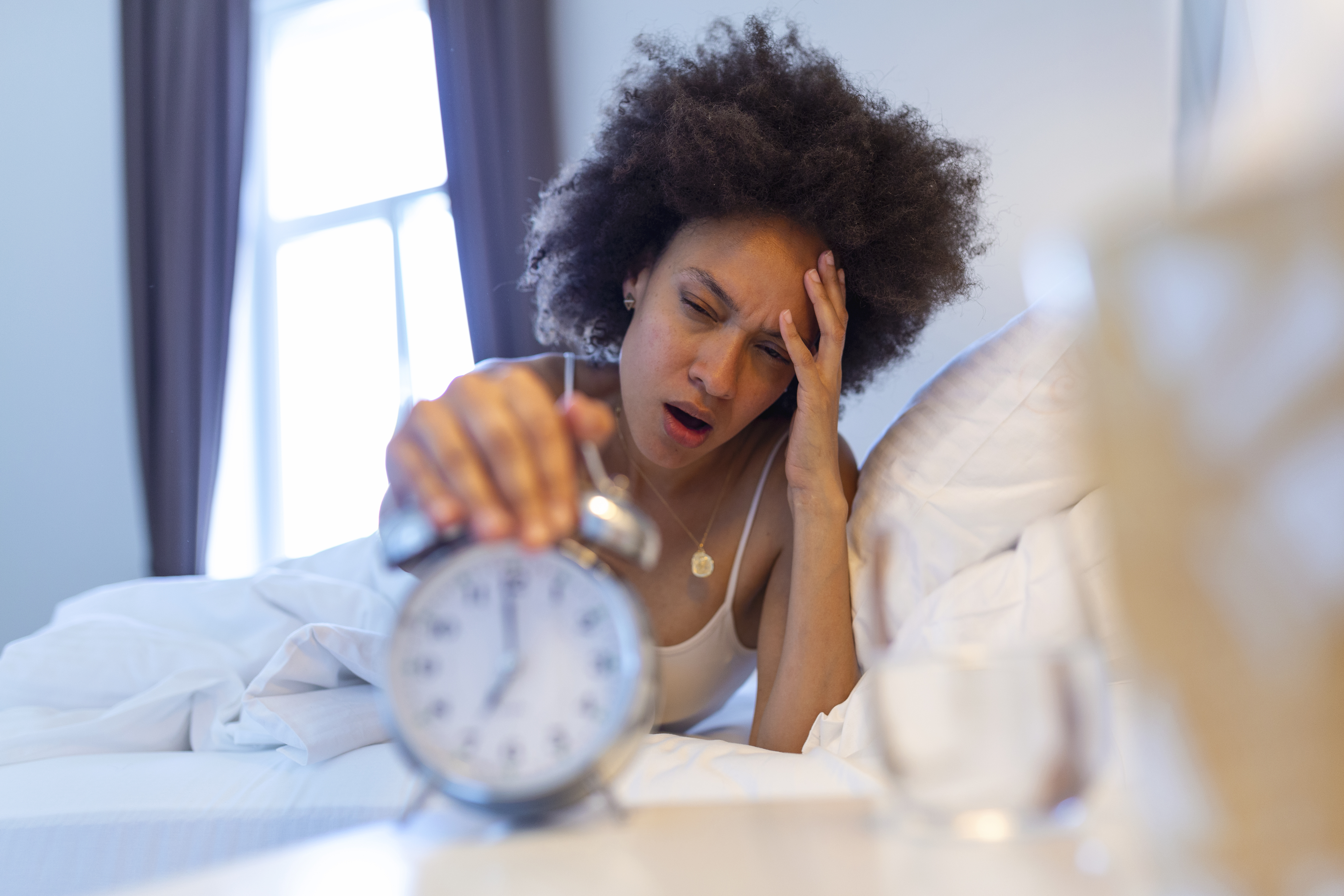

It’s 3:07 a.m. again.
You’re exhausted. You want sleep. But your body feels “on.” Your mind is running through tomorrow, yesterday, and every possible outcome in between.
If you’ve ever wondered, “Why am I wide awake at 3 a.m. like my system hit a panic button?” you’re not imagining it. One possible contributor is elevated nighttime arousal, which can include a later-than-ideal cortisol pattern in some people.
In this guide, you’ll learn what nighttime cortisol is, why it can spike, how to test it, and how to lower it using a practical plan that blends circadian science, CBT-I principles, and holistic lifestyle support.
Sleep Science Academy’s framing is simple: sleep is a result of understanding and balance. We focus on education and coaching that reduces the inputs keeping your system on guard. We do not diagnose or treat medical conditions. We do address the patterns that keep people stuck in an endless cycle of fear, doubt, worry and overwhelm which contribute to ongoing persistant sleep issues.
Can nighttime cortisol cause insomnia?
Elevated nighttime cortisol, a stress-hormone signal from the HPA axis, can increase alertness and fragment sleep. That can show up as trouble falling asleep, frequent awakenings, or the classic 2–4 a.m. wake-up with a racing mind. For many people, the most durable improvement comes from addressing behaviors, thoughts, circadian timing, and other drivers of arousal. Medications may still be appropriate in selected cases under clinician guidance.
What is nighttime cortisol?
Nighttime cortisol refers to the level of cortisol, the body’s primary stress hormone, circulating in your system during the hours when you should be winding down for sleep. Unlike its energizing morning peak, nighttime cortisol is meant to drop, allowing your body to shift gears from alertness to restoration. If this hormone remains elevated after dusk, it signals that your stress response system hasn’t powered down, which can keep your brain and body in a state of readiness rather than rest. This misfire in timing disrupts the natural transition to sleep, making it harder to fall or stay asleep through the night.
Why cortisol is supposed to be low at night and high in the morning
Cortisol is your body’s “get up and go” hormone.
Here’s what it actually does:
-
Mobilizes energy stores, so you have fuel ready (blood sugar on demand)
-
Keeps inflammation and immune activity in check, so you don’t overreact to daily stressors
-
Helps regulate blood pressure and mental alertness
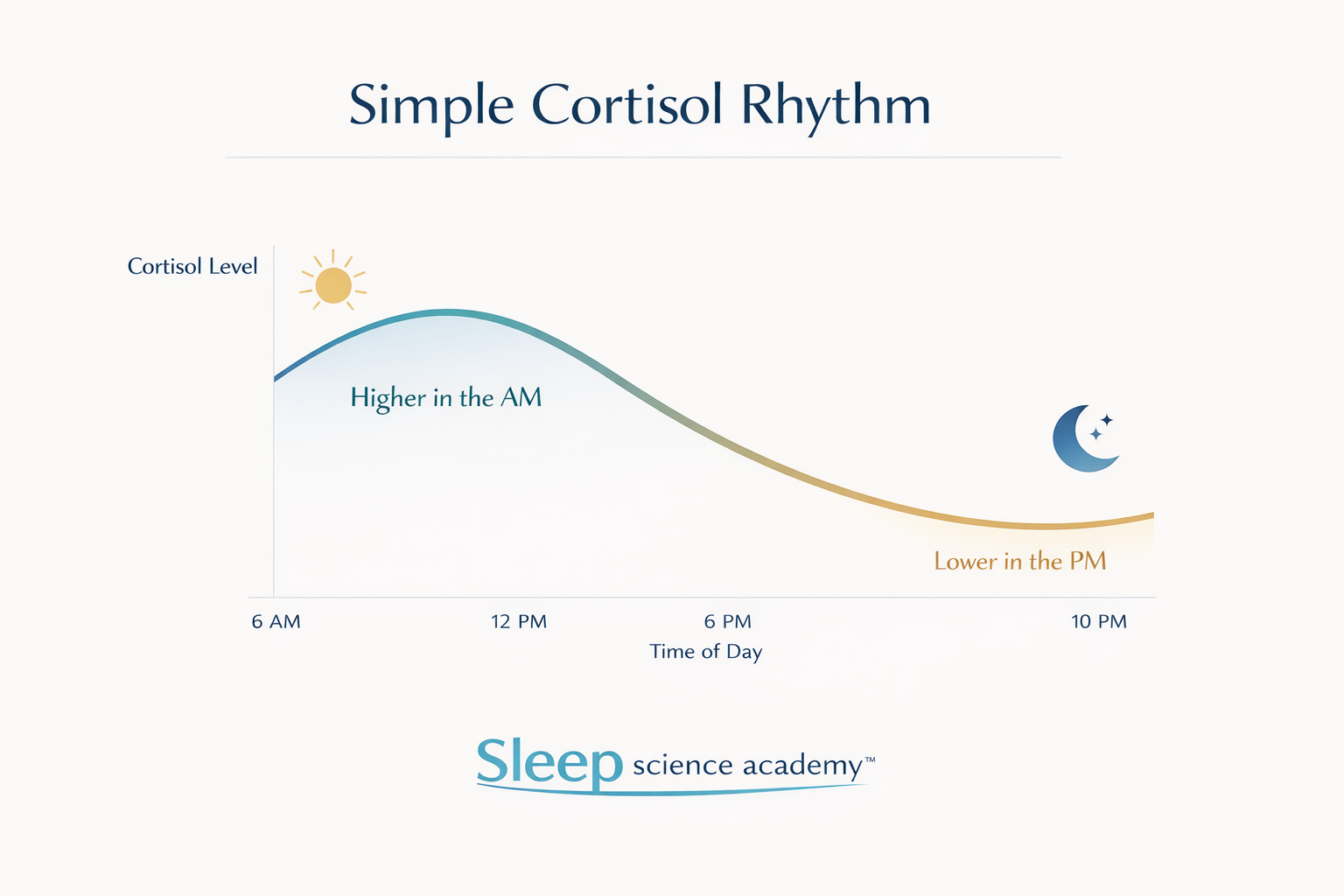
The catch: It’s not about having zero cortisol, but having it at the right time. You want cortisol to surge in the morning, nudging you out of sleep and into action. At night, you need it to drop, letting your brain and body downshift into repair mode.
The normal cortisol rhythm (CAR vs nighttime low)
Most people follow a daily pattern:
-
Morning: cortisol rises quickly after waking. This is called the cortisol awakening response (CAR).
-
Daytime: it gradually declines.
-
Night: it reaches its lowest point (the nighttime nadir) during the biological night.
This rhythm is coordinated by your circadian system and stress system together.
The HPA axis
Your stress-hormone signaling pathway is the HPA axis:
-
Hypothalamus releases CRH (corticotropin-releasing hormone)
-
Pituitary releases ACTH (adrenocorticotropic hormone)
-
Adrenal glands release cortisol
Cortisol is supposed to act like a thermostat. When enough cortisol is present, it signals back to reduce CRH and ACTH.
How cortisol connects to sleep architecture
Sleep isn’t one flat state. It cycles through:
-
Non-REM sleep (including deeper slow-wave sleep)
-
REM sleep (more brain activity, more vivid dreaming)
Cortisol naturally pulses across the night, but it should stay relatively low overall so your brain can sustain deeper stages and avoid frequent awakenings.
What “normal” looks like:
-
Higher cortisol in the morning supports wakefulness.
-
Lower cortisol at night supports sleep depth and continuity.
-
A later or higher nighttime cortisol pattern often correlates with lighter sleep, more awakenings, and early morning waking.
Symptoms of high nighttime cortisol
High nighttime cortisol often feels like being “tired but wired.”
Characteristic symptoms include:
-
Difficulty falling asleep even when exhausted: Your body feels fatigued, but your mind won’t settle down.
-
Abrupt awakenings between 2–4 a.m.: These are classic; you might wake up suddenly, wide alert, sometimes with anxious or racing thoughts that make it tough to drift back to sleep.
-
Noticeable nighttime “buzzing” or agitation: Some people describe this as an internal jitteriness, restlessness, or a sense of being “on edge” despite the late hour.
-
Increased heart rate at night: Wearables may reveal an unexpected spike in your resting heart rate during the hours you should be most relaxed.
-
Fragmented, shallow sleep: Even if you log enough hours in bed, your sleep feels light and unrefreshing, with frequent tossing and turning.
Clinical insight: These symptoms can overlap with other health issues. If you notice persistent changes, especially new physical signs like muscle weakness or rapid, unexplained weight gain, consult a medical provider for evaluation.
Common causes of high nighttime cortisol
Elevated nighttime cortisol usually points to two key dynamics:
-
Your circadian system is out of sync or receiving mixed signals.
-
Your brain perceives the nighttime environment as stressful, unsafe, or unfinished.
Key Triggers of Elevated Nighttime Cortisol
-
Chronic Psychological Stress: Sustained stress keeps your HPA axis overactivated, priming your body for alertness when it should be winding down.
-
Poor Sleep Hygiene: Irregular sleep schedules, especially varying wake times, confuse your internal clock and disrupt the natural cortisol rhythm.
-
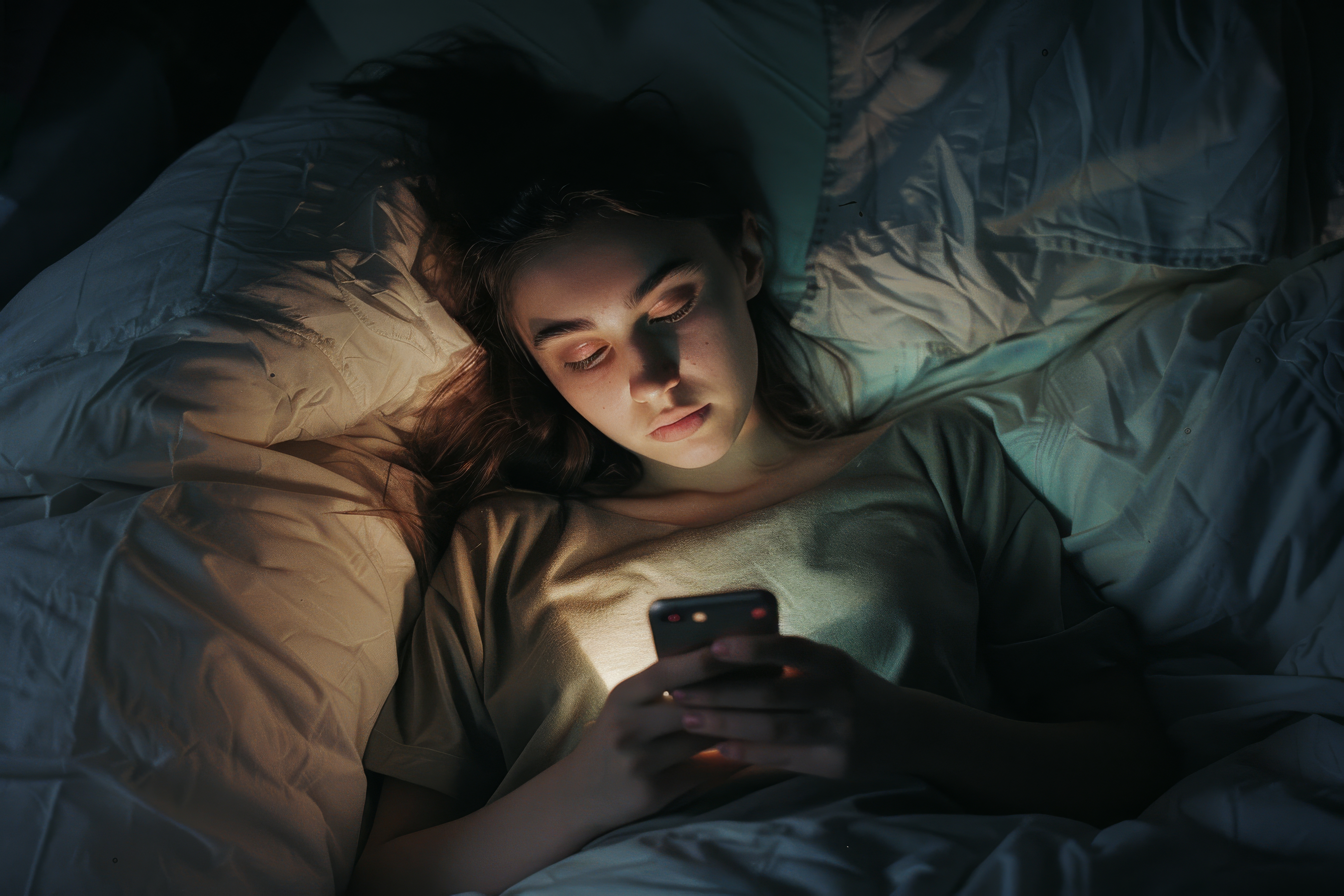
Late-Night Screen Exposure: Blue light from phones, tablets, and TVs suppresses melatonin and indirectly delays the expected nighttime drop in cortisol.
-
Late Exercise: Intense workouts a few hours before bedtime can spike cortisol and make falling asleep harder.
-
High Sugar / Processed Food Diets: Large, heavy, or high-sugar evening meals may worsen sleep for some people, but the effect varies.
-
Alcohol Use: Alcohol may feel sedating at first, but it commonly disrupts sleep later in the night.
-
Shift Work / Circadian Misalignment: Shift work can keep internal rhythms misaligned with the external light-dark cycle, which may impair sleep and alertness even when people partially adapt.
-
Sleep Apnea: Sleep apnea causes repeated arousals and can activate stress physiology overnight, which may worsen sleep quality and daytime symptoms.
How to test your nighttime cortisol levels
If you’re simply waking at night with stress and you have no red flags, you may not need testing right away. A structured behavioral and circadian plan can help clarify whether stress, schedule, conditioning, or lifestyle factors are contributing.
If you have strong symptoms, physical signs, or insomnia that persists despite solid CBT-I basics, testing can be appropriate through a clinician.
Nighttime salivary cortisol test
What it measures: salivary cortisol reflects free cortisol at a specific clock time. Late-night salivary cortisol is commonly used in endocrine screening, including evaluation for Cushing syndrome.
How to do it correctly (general best practices):
-
Collect at the exact time your lab specifies (often late evening)
-
Avoid eating, drinking, smoking, or vigorous exercise right beforehand
-
Avoid brushing teeth right before collection (gum bleeding can interfere)
-
Follow the lab kit instructions precisely
Interpretation guardrails:
-
A single high value is not a diagnosis.
-
Stress about the test itself can elevate results.
-
Interpretation belongs with a clinician, especially if values are markedly elevated.
When to consider testing/referral:
-
Rapid, unexplained weight gain
-
Purple stretch marks (striae), easy bruising
-
Proximal muscle weakness
-
New or uncontrolled hypertension
-
Persistent insomnia that does not respond to structured behavioral treatment
Blood and urine testing
Common medical testing options include:
-
Blood cortisol often drawn at set times (frequently morning, sometimes afternoon)
-
24-hour urinary free cortisol test to estimate total daily cortisol output
If you suspect a medical issue, clinician-directed testing is generally more reliable than random home kits. For collection details, see Mayo Clinic Laboratories guidance on late-night salivary cortisol protocols.
How to lower nighttime cortisol levels
This isn’t about making drastic, lifelong changes or achieving flawless sleep. Try focusing on two weeks of minimizing stress signals and reinforcing healthy circadian habits, then observe what shifts.
Track:
-
Sleep onset latency (how long to fall asleep)
-
Wake after sleep onset (minutes awake during the night)
-
Total sleep time (estimate)
-
Next-day function (energy, mood, focus)
One more rule: do not chase sleep. The harder you try, the more your brain reads it as a performance situation.
Anchor your circadian rhythm (light, wake time, consistency)
If you do only one thing, do this.
-
Pick a consistent wake time 7 days per week
-
Get outdoor light within 60 minutes of waking (even on cloudy days)
-
Dim lights 2–3 hours before bed (lower, warmer lighting helps)
-
Keep the bedroom dark, cool, and quiet
-
Stop clock-watching: turn the clock face away
Your brain needs one strong message: "Morning is morning. Night is night."
Use CBT-I principles to break the "bed = alert" link
This is where many people finally turn a corner.
Stimulus control
-
Bed is for sleep and intimacy
-
If you're awake around ~20 minutes (no need to time it), get up
-
Do something calm in dim light (paper book, gentle stretching)
-
Return to bed only when sleepy
Sleep window (sleep restriction therapy concept)
-
Too much time in bed lowers sleep pressure and increases fragmentation
-
A tighter sleep window increases sleep drive
-
Expand gradually as sleep becomes more efficient
Cognitive restructuring
Practice responding to catastrophic thoughts. For example, when you think "If I don't sleep, tomorrow is ruined," replace it with: "Tomorrow might be harder, but I can still function. My body knows how to recover."
Why this lowers cortisol indirectly: it removes the learned threat response and performance anxiety that keeps the HPA axis activated at night.
Downshift the stress response before bed
Pick 2–3 cues and repeat them nightly. Repetition is the point. Repetition builds safety.
Options that work well:
-
5 to 10 minutes of gentle stretching
-
Warm shower or bath
-
"Brain dump" journaling (worries plus next steps for tomorrow)
-
Guided relaxation or body scan
-
Slow breathing with a longer exhale (for example, inhale 4, exhale 6)
If trauma features are present, specialized therapy support is often essential. Coaching can complement that work, but it does not replace it.
Foods that may lower nighttime cortisol
Focus on steady energy, not dietary perfection.
Helpful patterns:
-
Complex carbs at dinner (as tolerated) can support calm and satiety
-
Magnesium-rich foods: pumpkin seeds, leafy greens, legumes
-
Omega-3 sources: salmon, sardines, trout, chia, flax
-
Adequate protein earlier in the day
If you reliably wake hungry or shaky
Try a small balanced snack:
-
Yogurt + berries
-
Nut butter + toast
-
Cottage cheese + fruit
Limit
-
Alcohol close to bed (often worsens second-half sleep)
-
Heavy, fatty late meals
-
High-sugar desserts late at night
-
Caffeine later in the day
Supplements that may lower nighttime cortisol
Supplements are support tools, not the foundation. If the inputs stay the same, the outcome stays the same.
Common options to discuss with a healthcare provider:
-
Magnesium glycinate: often a reasonable first step for sleep quality and evening calm; generally well tolerated
-
L-theanine: may help some people feel less mentally activated at night, but evidence is still developing
-
Phosphatidylserine: sometimes used for stress physiology support; mechanism is worth discussing with a clinician if you are exploring cortisol-related patterns
-
Ashwagandha: some evidence for stress reduction in certain populations, but can be contraindicated for some conditions and medications, so do not self-prescribe
Disclaimer: supplements are not a replacement for medical treatment. Consult a healthcare provider before starting, especially if you are pregnant, managing thyroid issues, or taking medications.
Nighttime Cortisol Tea
If you enjoy a warm cup of tea in the evening, choose caffeine-free herbal teas that support relaxation without stimulating your system:
-
Chamomile: The classic bedtime tea. Some small studies suggest it can ease mild anxiety and promote sleep.
-
Lemon Balm: Mildly sedating, with research showing potential to reduce stress and restlessness.
-
Peppermint: Naturally caffeine-free and soothing for digestion—just skip it if you’re prone to reflux or heartburn.
What to avoid:
-
Hidden caffeine: Many “relaxing” blends sneak in green, black, or even white tea, which can spike cortisol and sabotage sleep.
-
Sugary “sleep teas”: Sugar disrupts blood sugar and can trigger awakenings later in the night.
A gentle reminder: No tea will instantly erase nighttime cortisol spikes. The real benefit is the predictable, calming routine. Release expectations of a “miracle fix”. Putting pressure on yourself to fall asleep quickly often backfires. Instead, savor your tea as a nightly cue for your body to shift toward rest.
High nighttime cortisol treatment
This matters because you deserve the right tool for the right problem.
What coaching and education can address
Sleep coaching can help you implement:
-
A stable schedule and wake time
-
Light timing and circadian anchoring
-
CBT-I principles (stimulus control, sleep window)
-
Cognitive and behavioral patterns that maintain insomnia
-
Stress skills, mindfulness, acceptance-based strategies (ACT-informed)
-
Holistic “24-hour inputs” that impact nighttime arousal
At Sleep Science Academy, we use a holistic approach (Dynamic Sleep Recalibrating) that integrates proven CBT-I principles with mindfulness, acceptance strategies, and coaching tools to address root drivers, not just symptoms.
When medical evaluation is appropriate
See a clinician if you have:
-
Signs suggesting endocrine disorders (possible Cushing syndrome features)
-
Severe depression, suicidality, or escalating panic symptoms
-
Medication side effects that need professional adjustment
-
Pregnancy-related sleep disruption needing medical input
-
Uncontrolled hypertension or major unexplained weight changes
Therapy options that are often clinician-recommended for insomnia
-
CBT-I
-
Brief Behavioral Treatment for Insomnia (BBTI)
-
ACT for insomnia
Medications are clinician-directed and usually short-term, individualized decisions
Wrap-up: the simplest path to calmer nights
The key to restful sleep isn’t about forcing your body to sleep; it’s about removing the barriers that keep your system on high alert. Focus on foundational steps and match your time in bed to your actual sleep needs. Establish a simple, repeatable wind-down routine, be mindful of caffeine and alcohol timing, and tailor your evening meals if late-night hunger disrupts you. If you experience persistent issues or encounter red flags, consider appropriate testing.
Envision a future where you wake up refreshed, not because you struggled for sleep, but because your system finally let go of nighttime vigilance. With peace of mind comes renewed energy and presence in your day.
For individualized support, explore Sleep Science Academy’s insomnia coaching resources.